

Samiei-Nejad: Authorization granted to sell foreign currency earned from exports on the Second Hall of the Exchange Center/ Four IMIDRO’s strategies for the new term / “Future-based outlook” a vital factor in the steel industry
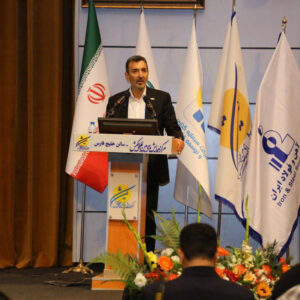
According to Nisco’s public Relations quoting IMIDRO’s public relations, Mohammad Masoud Samiei-nejad at the opening ceremony of the Steel Symposium 1404, held in Kish Island, noted: regarding the Seyed Mohammad Atabak, the Minister of Industry, Mine and Trade, follow-up, conditions were provided for the steel industry chain to offer foreign currency earned from exports in the secondary market of the Exchange Center.
He added: We should appreciate the pioneers of the steel industry who, after the revolution, laid the tracks for the development and infrastructure of steel, so that today we witness achieving top positions in the region.
IMIDRO’s New Strategy
Referring to IMIDRO’s strategies in the new era, the Deputy Minister stated: Completing the value chain, focusing on unfinished projects, removing production bottlenecks, developing new and smart technologies, and moving towards the production of green and low-carbon steel are among IMIDRO’s priorities.
Samiei Nejad continued: Strengthening energy, water, and transportation infrastructure through joint investment with the private sector and development institutions, as well as strengthening IMIDRO’s role in removing barriers to production and providing strategic support for the development of the mine and mining industries sector, are among the main strategies of this organization in the new era.
A Future-Based View of the Country’s Steel Industry
He continued: Steel is an industry that is the backbone of the country’s national development, not only in the past but also in the future.
Samiei Nejad, by raising the question of why we need foresight, stated: The world is changing, and in this process, technological and environmental transformations are changing the equations of the industry. He pointed out: Steel is a vital and challenging industry. This industry faces challenges such as decarbonization, energy efficiency, global competition, and changing demand. In this regard, the future belongs to far-sighted companies; companies that are successful in digital innovation, human resources, and sustainability investments.
The three main elements of future foresight:
IMIDRO’s Chairman of the Executive Board of Directors stated: Data-based analysis, demand forecasting, and intelligent decision-making create a new path for risk management and value creation in the steel chain.
He added: Moving towards low-carbon production through clean energy and hydrogen technology is the key to achieving green steel and sustainable competitiveness.
Samiei Nejad noted: Additionally, smartization and sustainable development are key factors in transforming various industries, including the steel industry.
The Deputy Minister of Industry, Mine, and Trade, referring to global trends affecting the future of steel, stated: Digitalization, green steel and clean energy, re-globalization and Asian competition, and changes in demand patterns such as lightweight and advanced steels are among the most important global strategies in this industry.
Samiei Nejad identified decarbonization, the use of renewable energy, recycling, and energy efficiency as key factors in achieving green steel goals.
Iran’s global position in the steel industry
Deputy minister referring to Iran’s global position in the steel industry, noted: Iran ranks 10th in the world and first in the region in steel production, contributing 4.5% to the national gross production, 16% to the capital market, 15% of non-oil exports, and 8% of employment. These figures reflect our national achievements in this industry, which can be further improved through advancements in technology and management.
The head of IMIDRO, while appreciating the organizers of the 1404 Kish Steel Symposium, added, “The future belongs to those who make decisions today. Foresight is not a tool for survival, but a tool for leadership so we must shift from more production towards sustainable production.”